Our Water Heater Leak Repair Process
Not sure what happens when you call about a leaking water heater? This page walks you through our exact process, from your first call, through the step by step checks that prove where the water is escaping, to an honest repair plan you agree to before any work begins, and a final test before we leave. No guessing, and no repair you did not approve.
What Happens When You Call Us?
When you call, you talk to a real person, not a call center. Tell us what your water heater is doing: where the water is, how long it has been there, and any sounds, rust or smells you have noticed.
We may ask a few simple questions, like the age of the heater and where it sits in your home, a basement, a garage or a utility room. Then we arrange a visit time that suits you, and tell you anything worth doing before we arrive, such as moving stored items away from the water.
- You talk to a real person. The person who answers knows water heaters and asks the right questions.
- We arrive knowing where to start. Your answers on the call tell us which checks your heater needs first.
- Nothing is booked on a guess. The visit starts from what you described, not from zero.
How Should You Prepare Before Our Visit?
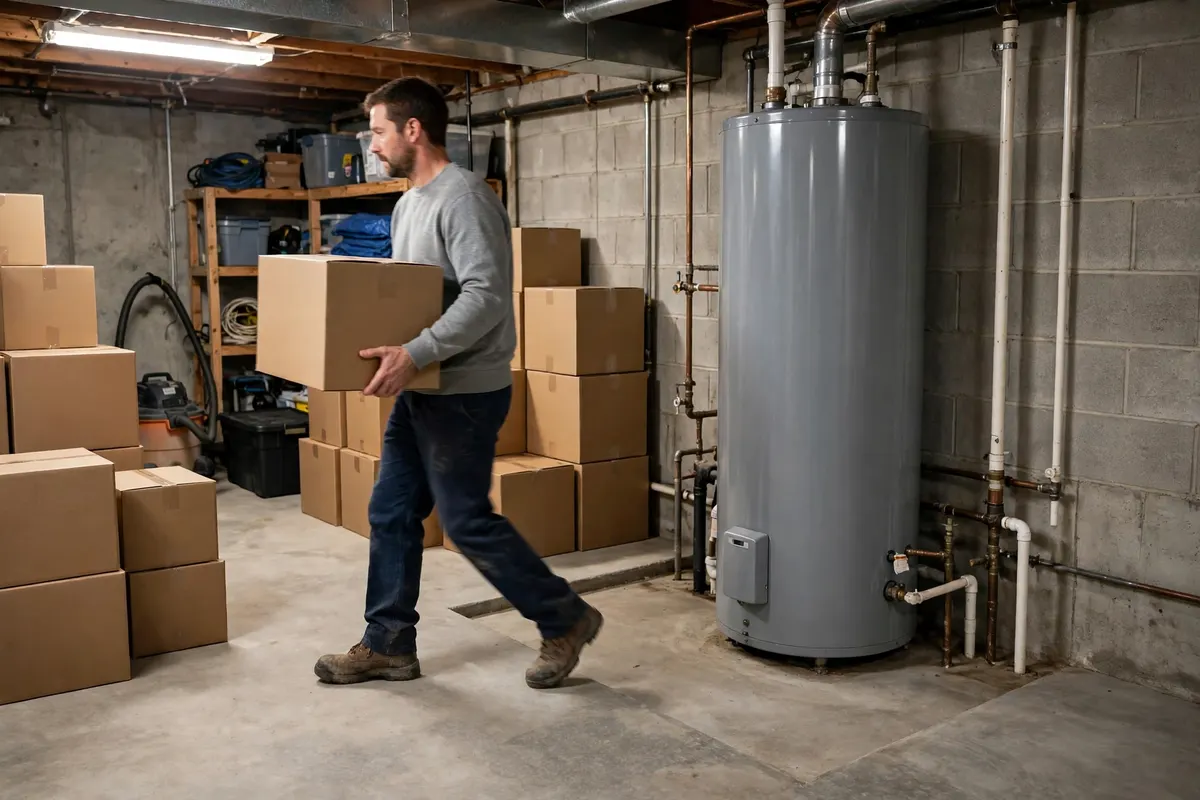
A little room to work helps us test properly. Clear a path to the heater and move boxes and stored items a few feet away from it, and keep pets in another room while we work.
If the leak is active and water is spreading, turn off the heater supply valve if you can reach it safely. It is usually on the cold water pipe above the tank. Mop up what you can so the floor can dry. If water is near anything electrical, or you cannot reach the valve safely, leave it alone and tell us on the call. We will handle it when we arrive.
What Do We Check Step by Step When We Visit?
Every visit follows the same order, so nothing is missed. Each check either proves something or rules it out, and you see the proof as we go.
Water Heater and Tank Inspection
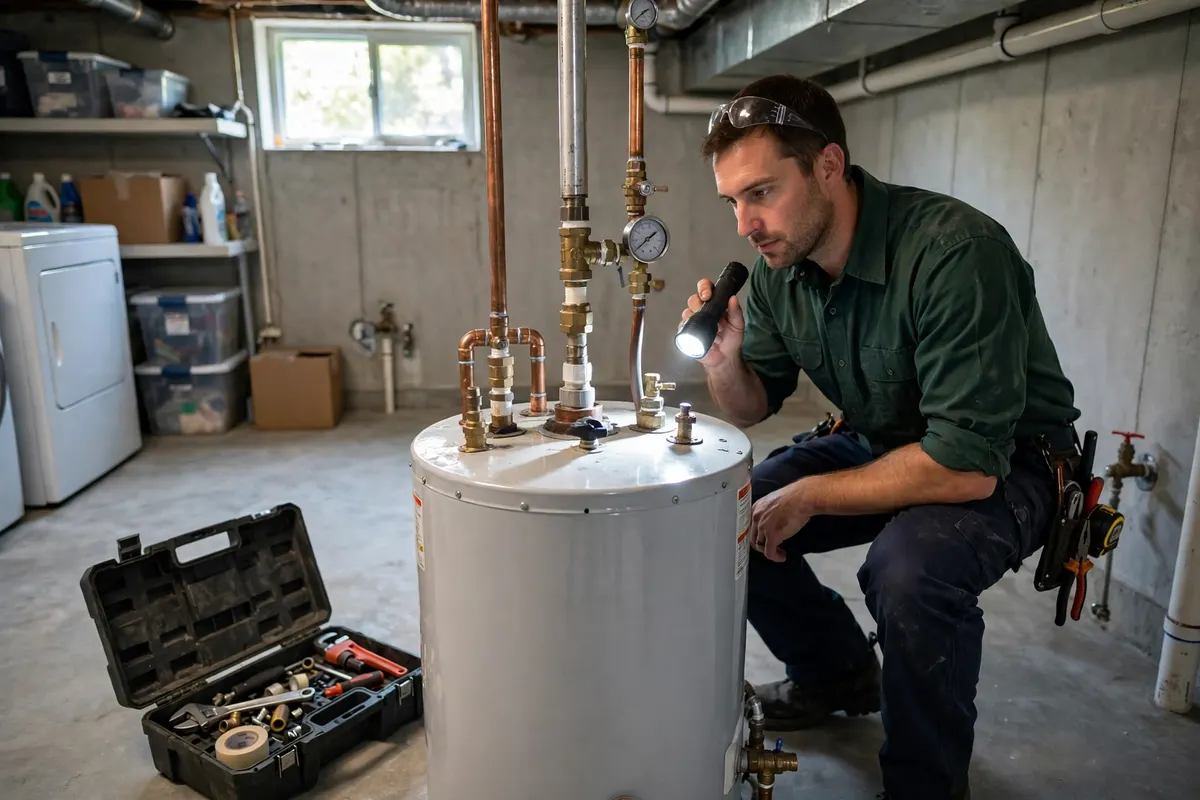
We look over the whole tank for rust, bulges and damp spots, and note its age and general condition.
Pipe and Connection Inspection
Every pipe and joint above and below the tank is checked for drips, green corrosion and loose fittings.
Valve Inspection
The relief valve, drain valve and shutoff valve are all tested, because small valves cause a large share of leaks.
Leak Source Identification
We trace the water to the exact point it escapes, using moisture checks and the rust and mineral trails that water leaves behind.
Corrosion and Damage Assessment
We check how far rust or water damage has spread, both in the heater itself and in the floor and wall around it.
Repair Recommendations
You see photos of what we found and hear your options in plain words, starting with the small repair whenever a small repair is honest.
What Happens After We Find the Leak?
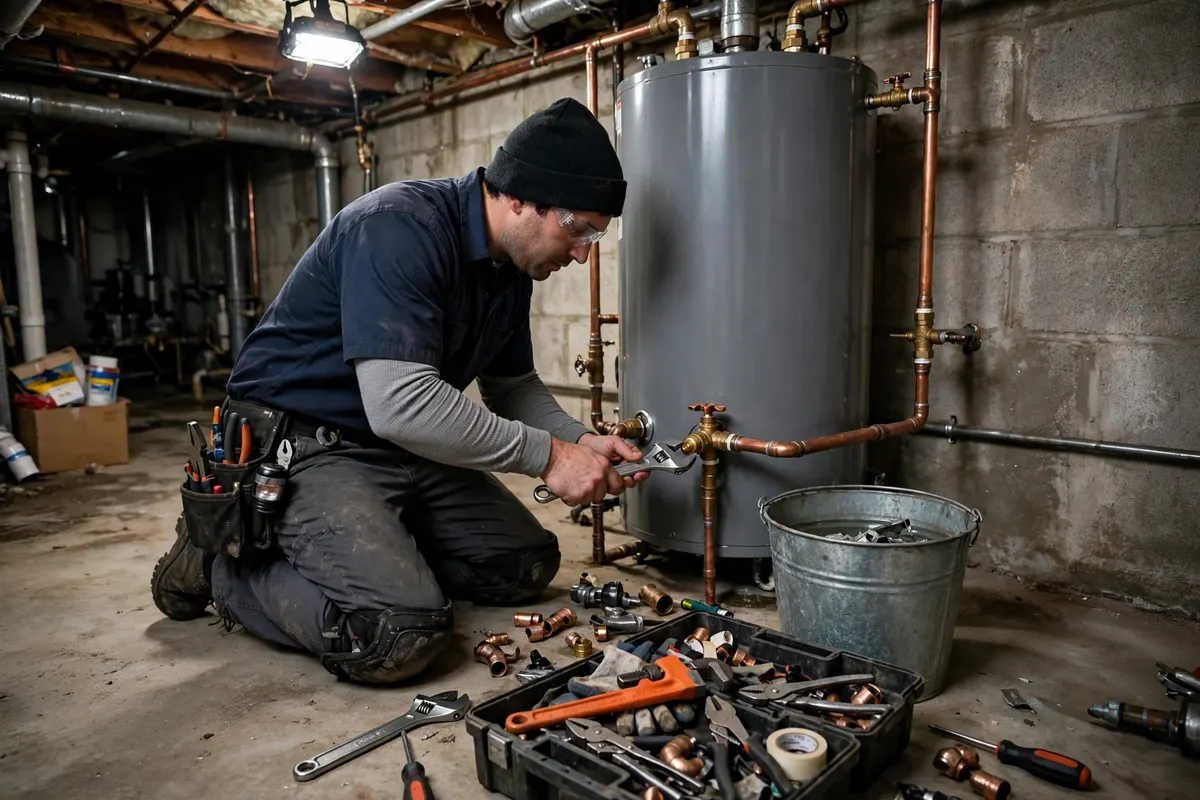
The repair depends on where the leak is and how bad it is. A leaking pipe connection is remade or the worn section is replaced. A faulty valve is repaired or swapped for a new one, brass where brass matters.
Many leaks live in replaceable parts: seals, fittings, valves and rods that wear out long before the tank does. Those are changed on their own, so you pay for the part that failed, not a whole new system. And if the tank itself has rusted through, we will tell you plainly, because no patch on a failed tank lasts. That case is covered in the replacement section below.
How Do We Check the Water Heater After Repair?
Nothing is called finished until it has been tested. The system is filled again and brought back up to working pressure and heat, and every point we touched is checked while the hot water runs.
- Leak check under a full hot water run. Repaired joints and valves are watched while the system is hot and pressurised, the moment weak work would show itself.
- Valves opened and closed. The shutoff, relief and drain valves are operated, so you know each one works the day we leave.
- Whole area checked once more. The tank, pipes and floor are looked over a final time for any second drip that was hiding behind the first.
- Photos and a plain walkthrough. You see the finished work and hear what was done, what was replaced, and what to watch in the coming days.
What If Your Water Heater Cannot Be Repaired?
Sometimes the honest answer is a new heater. That is the case when the tank body has rusted through, when the heater is old and repairs keep adding up, or when it can no longer keep up with your home.
If that day comes, we walk you through your options in plain words: a tank or a tankless unit, the right size for your household, and what the swap involves from start to finish, including hauling the old unit away. The choice is yours, made with clear eyes and photos of why the old one is finished. Most replacements are planned on a day that suits you and finished in a single visit.
What If It Is Not a Leak at All?
Sometimes we check a heater from top to bottom and find no leak at all, and we say so honestly. The water often turns out to be something normal: a tank sweating in a humid basement, a relief valve letting out a little water because the house pressure runs high, or condensation dripping off a cold pipe above the tank.
A no leak answer is still a useful answer. You learn your heater is sound, you learn what the water really was, and you skip a repair you never needed. We walk you through what each check showed, so you are not left wondering.
What Do Customers Ask About Our Repair Process?
Need Help With a Leaking Water Heater?
Do not let a small drip turn into a damaged floor and a dead tank. Call Attleboro Leak Experts today. We will find the real leak, show you the proof, and agree the fix with you before any work begins.